



Our mission is to advance God’s Mission of making dedicated followers of Jesus Christ in Princeton, the Northeast, and around the world.
Whether this is your first Sunday or your church home for many years, we’re glad you’re here. Below, you can find ways to help you stay connected, follow along in worship, and discover what’s happening in the life of our church each week. We believe God meets people in every season, and there’s a place for you here.
Worship Service Order
This week’s theme: Earthly wealth does not bring security but security is found in God alone.
1. Call to Worship
Psalm 62:8-11
2. Opening Hymn
Holy, Holy, Holy
3. Invocation
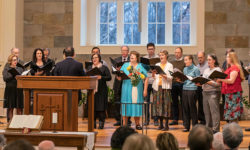
4. Choir Anthem
Seek Ye First
5. Scripture Reading
6. Confession of Sin & Promise of Pardon
7. Apostles’ Creed
8. Worship In Song
My Worth is Not in What I Own; Holy Forever (click on the song for lyrics).
9. Pastoral Prayer
10. Doxology
11. Sermon Text
Ecclesiastes 5:8-6:12 (Click Here)
12. Sermon
Real Security is Found in God Alone | Pastor Tracy Troxel
13. Closing Hymn
And Can It Be
14. Benediction
Announcements
Newcomer Reception
All newcomers are invited to attend a small reception after both services in the Prayer Chapel. This is a great opportunity to meet other newcomers and church leadership!
Membership Info Session
Learn about what it means to become a member at Stone Hill Church today in the Prayer Chapel at 10:30 a.m. Interested in applying for membership? Submit an application today!
GriefShare “Surviving the Holidays”
Navigating the holidays after losing a loved one can be difficult, but you don’t have to go through it alone. Join us for a supportive GriefShare “Surviving the Holidays” session in the Ristuccia Library, where you can share a complimentary dinner and find comfort among a sympathetic community. Learn more and register here.
What’s Happening?
Check out this week’s Happenings Email to learn more about what’s going on in the church! Interested in getting on the email list? Reach out to info@stonehillprinceton.org to get added.
Get Connected, Join a Small Group
Interested in getting more connected with your community at Stone Hill? You’re invited reach out to smallgroups@stonehillprinceton.org to get more information about joining an existing small group or starting one of your own!
Study
Three general questions for digging deeper:
- What does this text teach us about God?
- What does this text teach us about ourselves?
- If this text is true, what should we do to obey this teaching?
Questions specific to the October 25 sermon from Ecclesiastes 5:8-6:12:
- Why does money fail to provide security in this life?
- Why do human beings appear to never be satisfied with the world?
- How can you find contentment in what God has provided for you?
- Where is real security found? Why is God the only one who can provide security for us?
Give
All that we have is a gift from God. We believe that the gifts Stone Hill receives are to be used in the mission of making dedicated followers of Jesus Christ in Princeton and around the world. If you would like to contribute financially to Stone Hill please consider using one of the following methods:
ONLINE
One-time or recurring donations can be made securely through this giving page. If you have any questions, please contact giving@stonehillprinceton.org.
IN PERSON
In-person during one of our Sunday services, or drop by the office during office hours.
BY MAIL
Stone Hill Church of Princeton
1025 Bunn Drive
Princeton, NJ 08540
Serve
There are many serving teams in need of volunteers, and there’s a place for everyone to jump in. Whether you can serve every week or just once in a while, we’d love for you to be part of what God is doing through our church.
Cafe Team
8:00-9:00 a.m. and 12:45-1:15 p.m.
Contact Noah Smartt
Facilities
A/V team, Grounds, Sunday Assistant, Online Service, Laundry, Painting
Contact Nathaniel Mariman
Front Door Team
Atrium Hosts, Ushers, Welcome Desk during both worship services
Contact Noah Smartt
Sunday Worship Service Musicians
Vocalists, Musicians, Organists
Contact Amy Wells
Nursery, Toddler and Preschool
Class volunteers at both services
Contact Betsy Ferrer
Social Media
Experience with social media directly or general photography, graphic design, videography, etc.
Contact Daniel Dyer
Pray
Prayer teams are available in the Observation Room and at the front of the Sanctuary after each service.
Rather submit a prayer request digitally? Submit your prayer request here.
We have weekly prayer meetings regularly. Learn more by emailing: prayer@stonehillprinceton.org
Questions? We’re here to help.
Looking for the right person to contact? We’re happy to help!
Baptism or Membership
members@stonehillprinceton.org
Small Groups
smallgroups@stonehillprinceton.org
Family Ministries
Young Adults Ministry
youngadults@stonehillprinceton.org
Church Building or Scheduling an Event
nathanielm@stonehillprinceton.org
Care or Benevolence
Global Outreach
globaloutreach@stonehillprinceton.org
Communications
communications@stonehillprinceton.org
Something else? Contact the office and we’ll help! info@stonehillprinceton.org